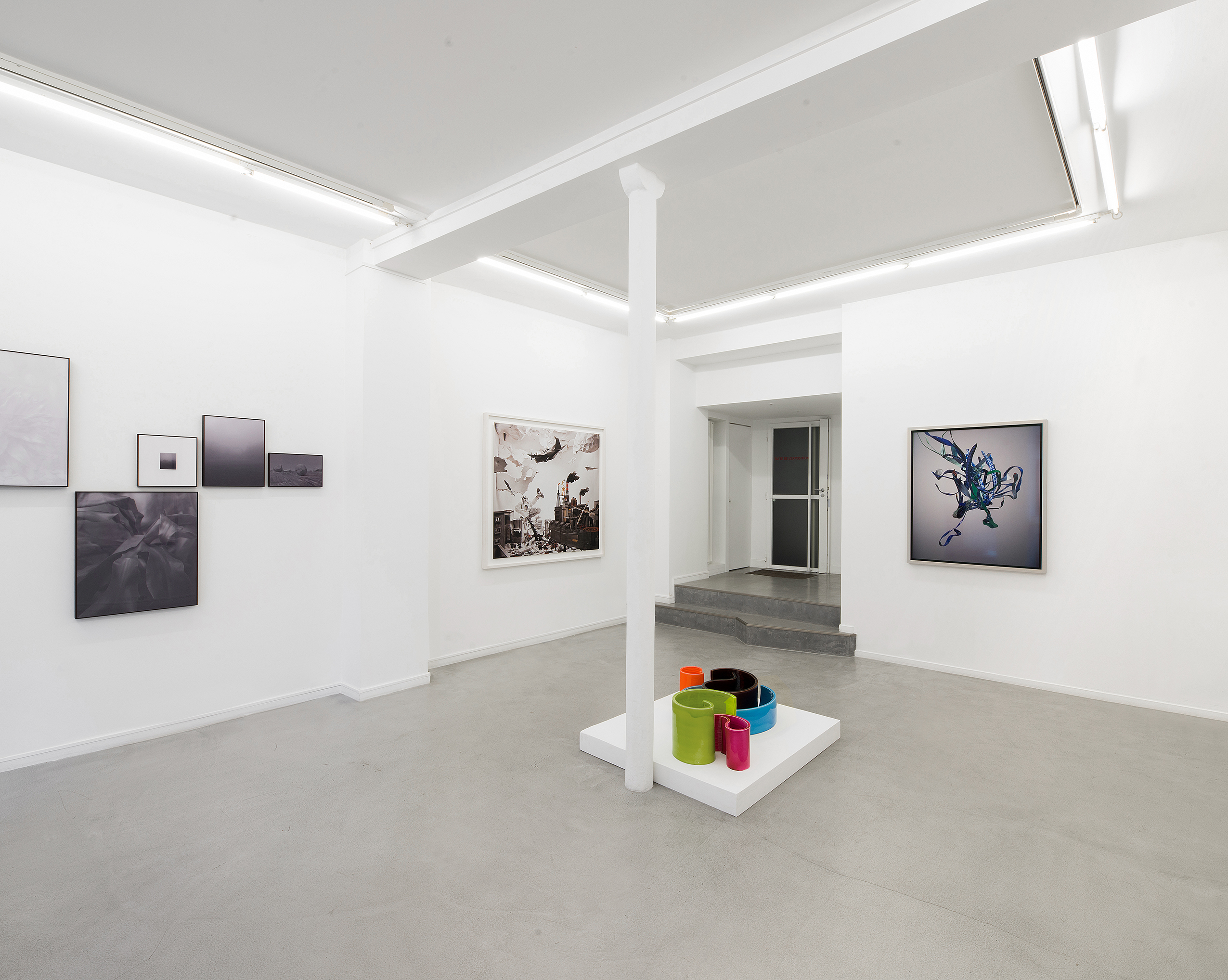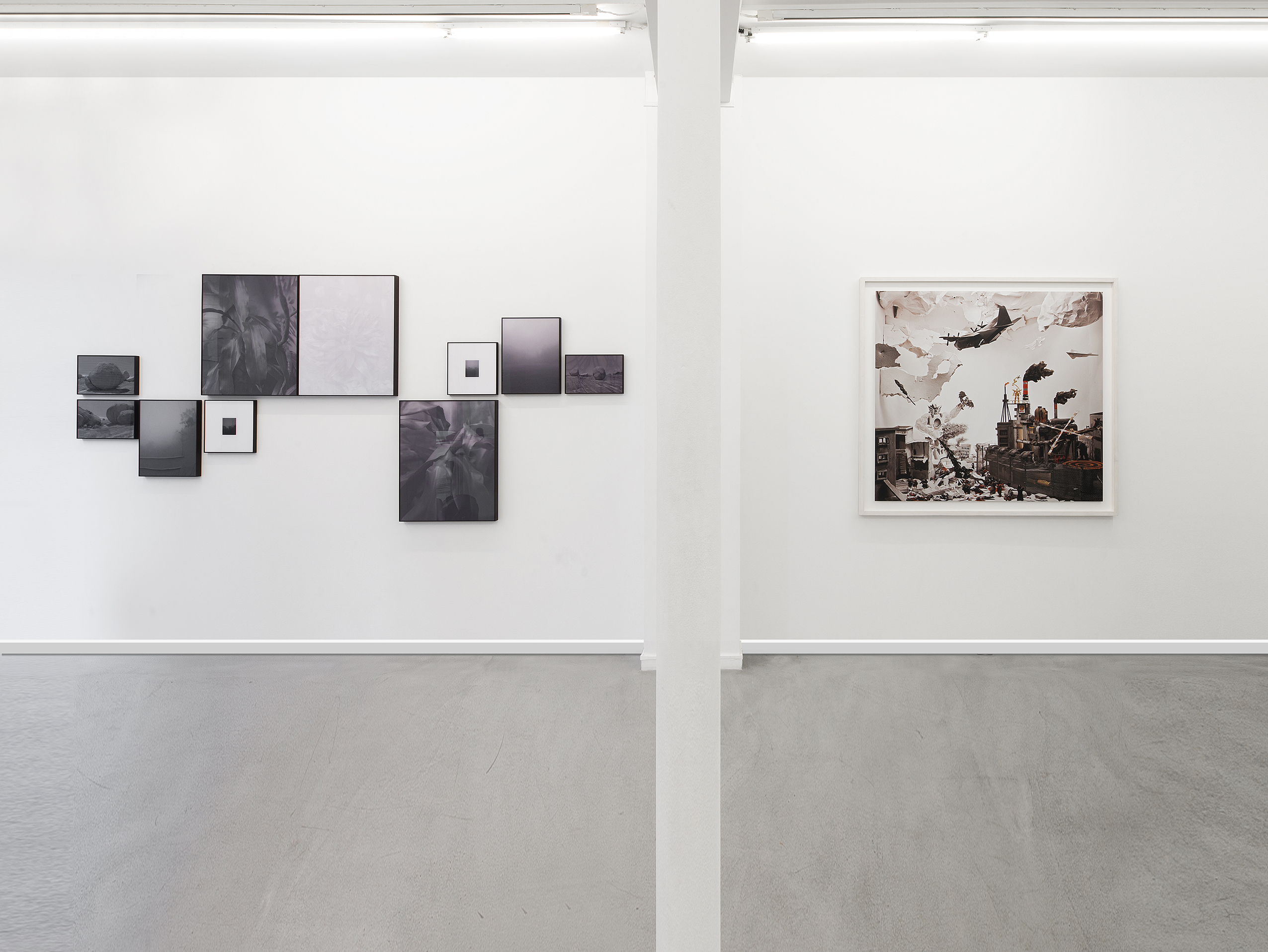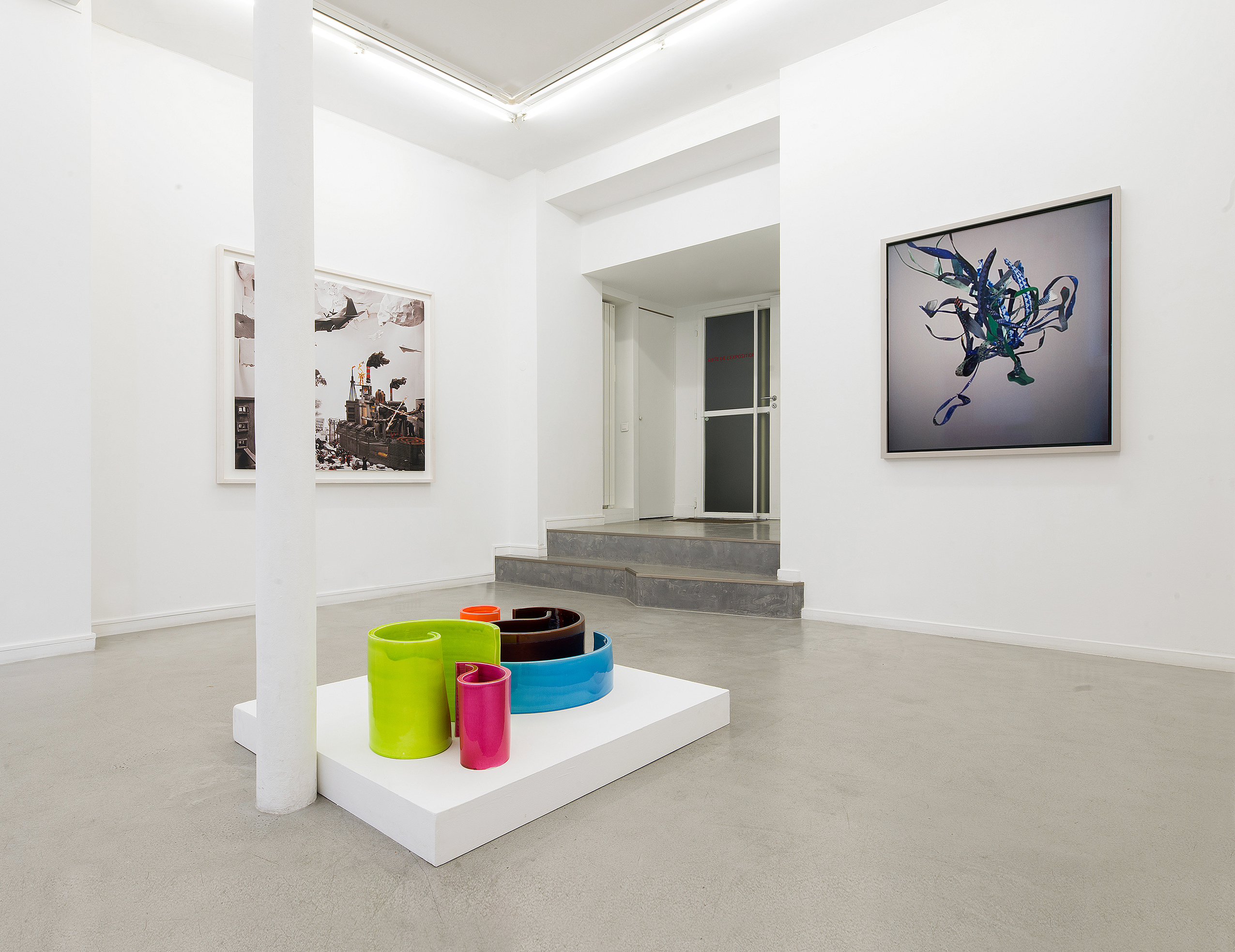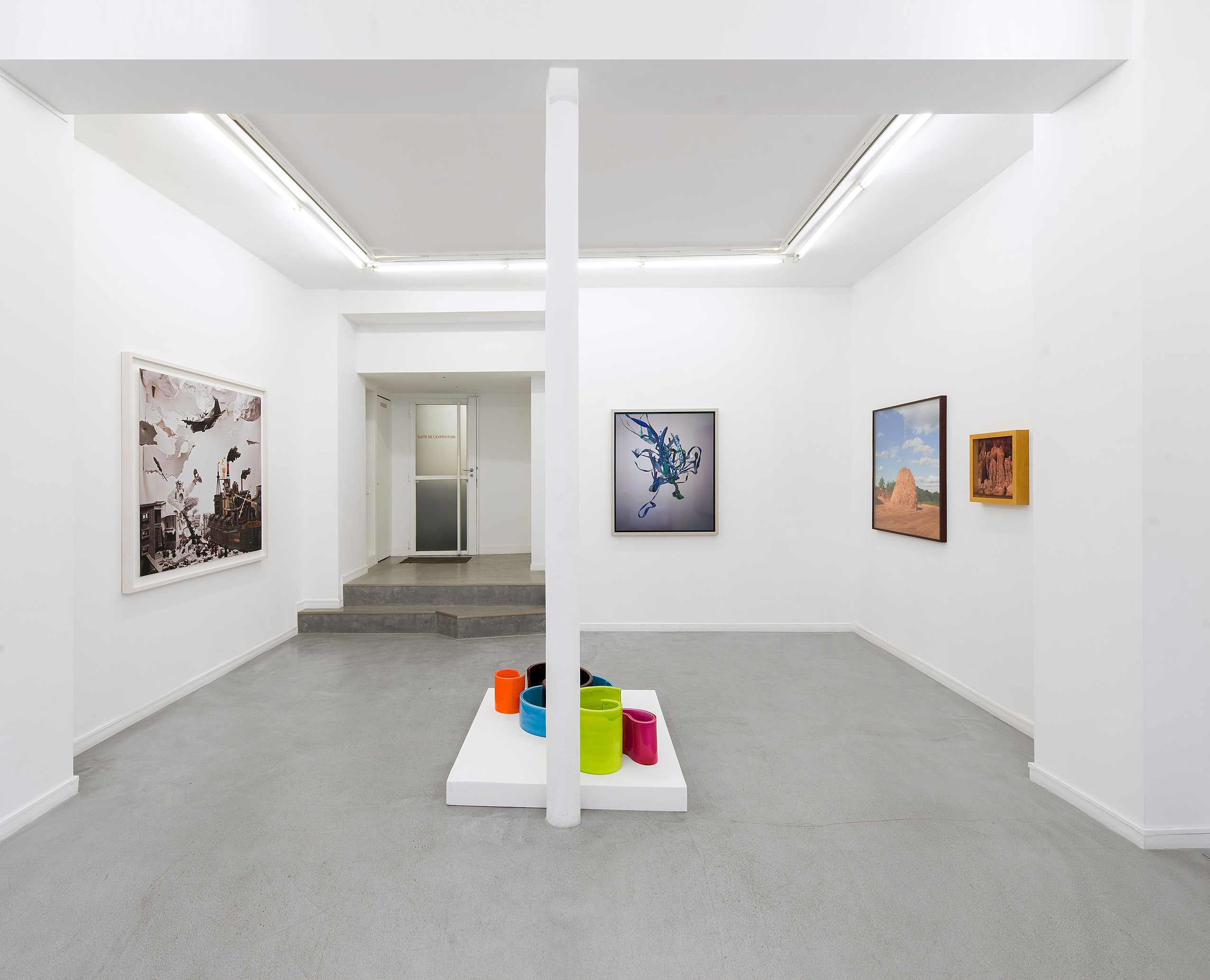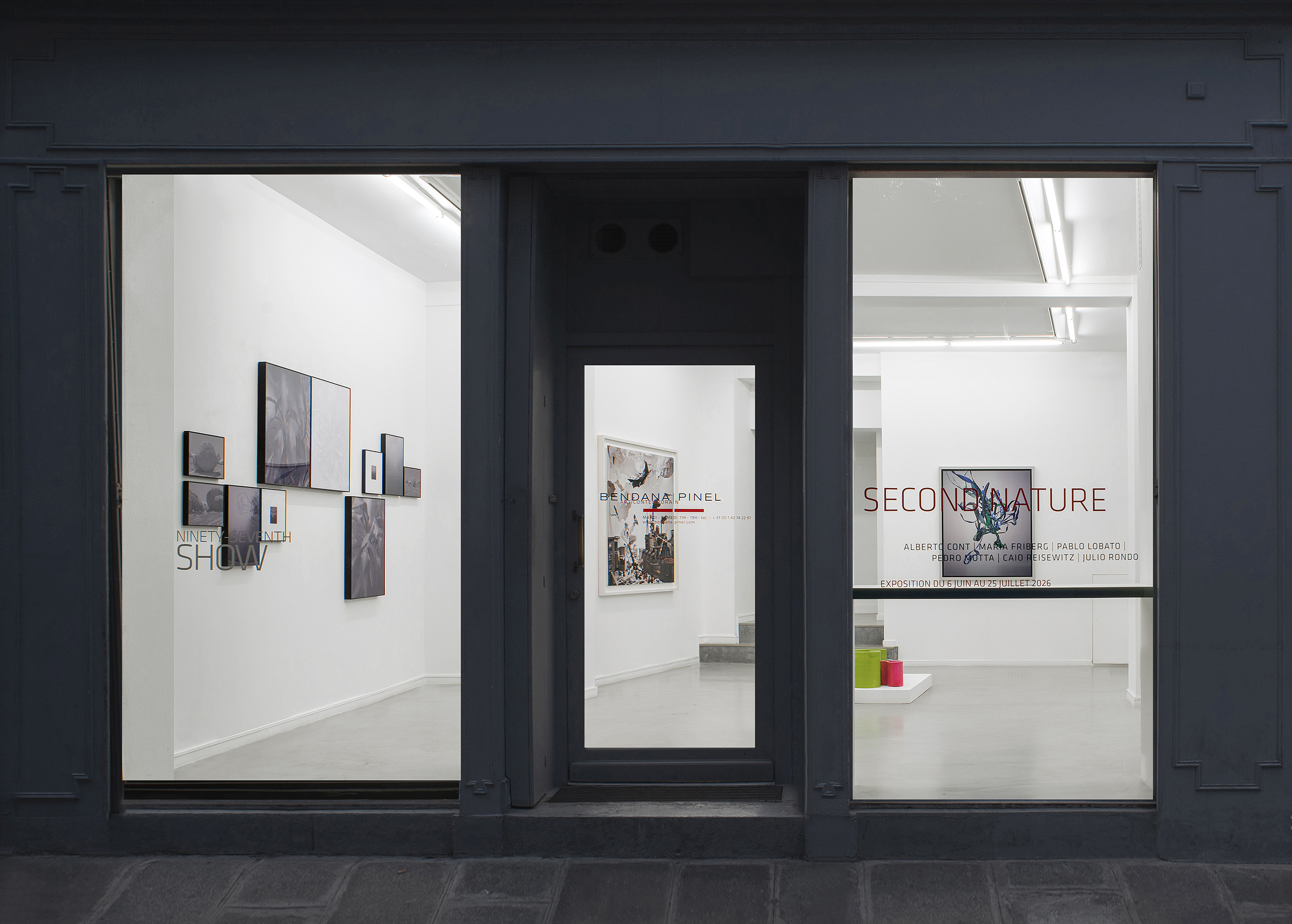
Bendana | Pinel Art Contemporain is pleased to present 'Second Nature', a group exhibition bringing together works by seven international artists. The title of the exhibition evokes the idea of a relationship to the world that has become almost instinctive, shaped as much by the natural environment as by social and cultural constructions. The participating artists thus explore the transformations of our landscapes, modes of perception and systems of representation, where space, light and matter become elements in constant reconfiguration. Their work navigates territories where nature and culture are no longer opposed, but intertwined and continually redefining the way we see.
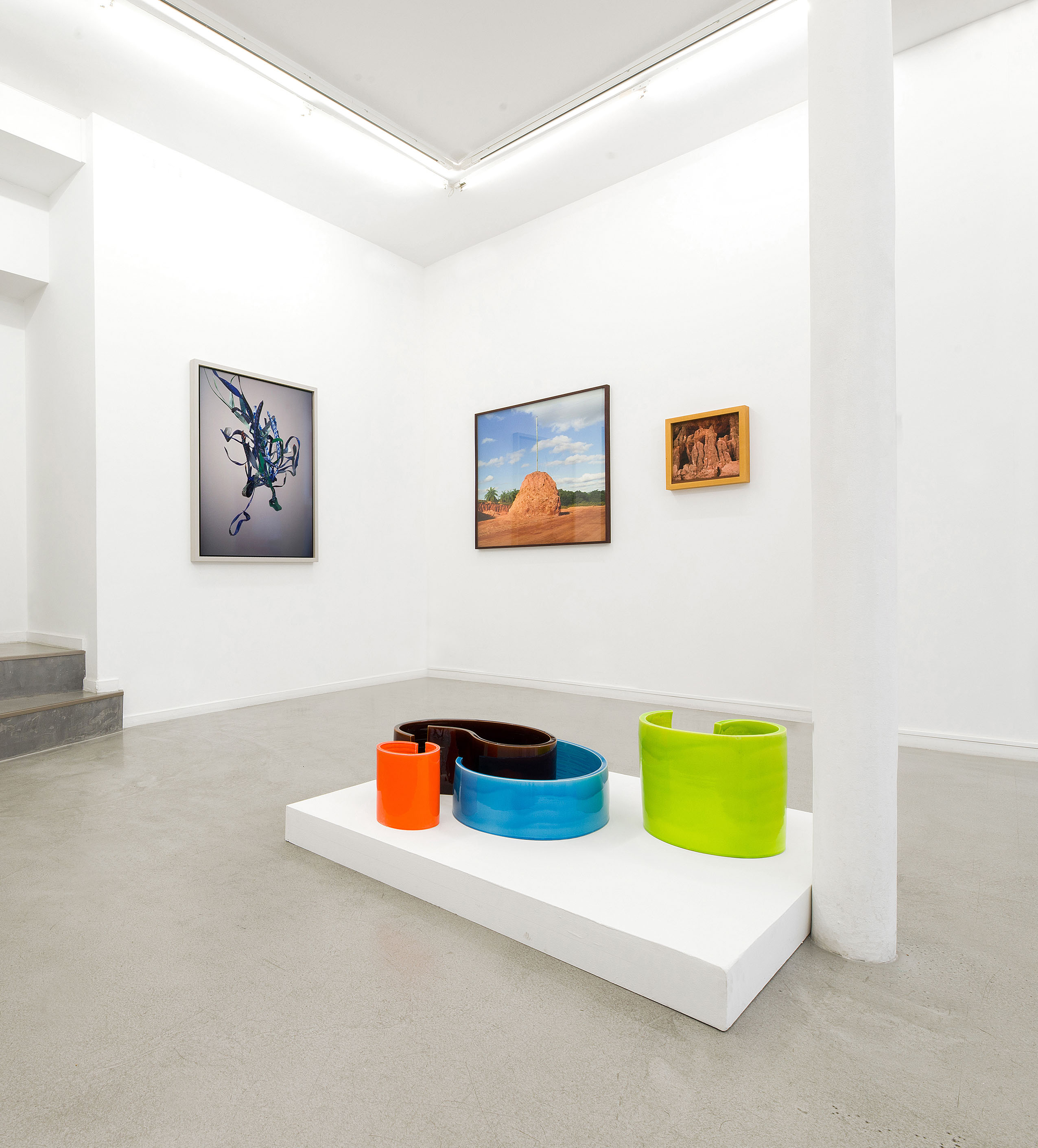
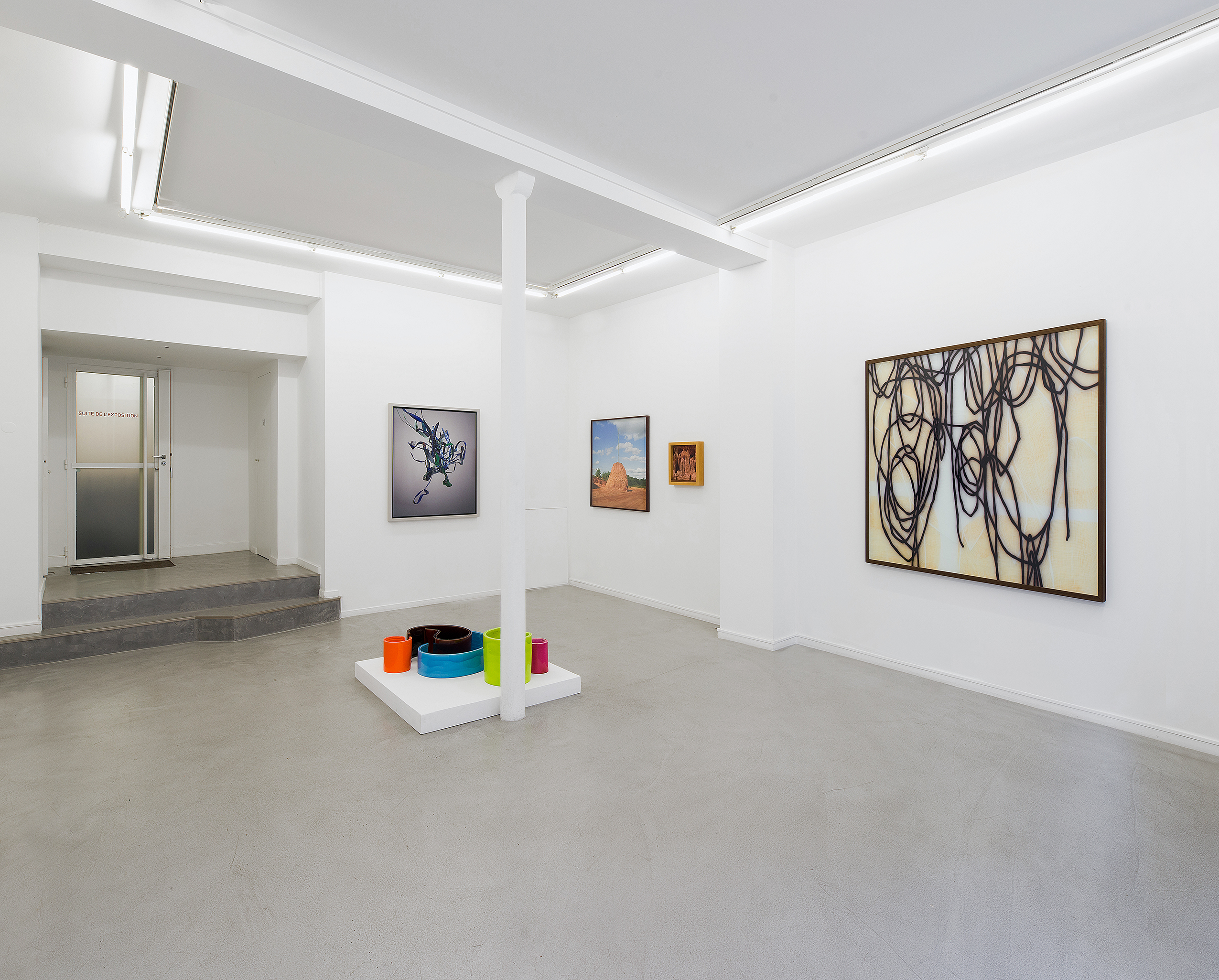
Alberto Cont focuses on light and colour, a pursuit that continues in his sculptures, which fossilise his painterly gesture in glazed stoneware. In his Labirinto series, colour becomes a true constructive element of volume and space. His coloured structures interlock to give rise to imaginary labyrinths, through which the gaze circulates, guided by lines, forms and chromatic depth. The viewer is thus absorbed into abstract and atmospheric landscapes, radiating genuine dynamic and luminous vibrations.
Maria Friberg is concerned with systems of power, social structures and the ways in which objects bear witness to these realities. In Past Lines III, a bouquet of ties becomes a powerful symbol: traditionally associated with authority and masculine dominance, the accessory appears here shattered, as a sign of a changing paradigm. The work also references hand-crafted ties from the 1940s, as well as the repurposing of men’s uniforms into women’s clothing during the war, blurring gender norms. Friberg thus questions the evolution of symbols and uses, while also highlighting production rooted in craftsmanship, quality and durability.
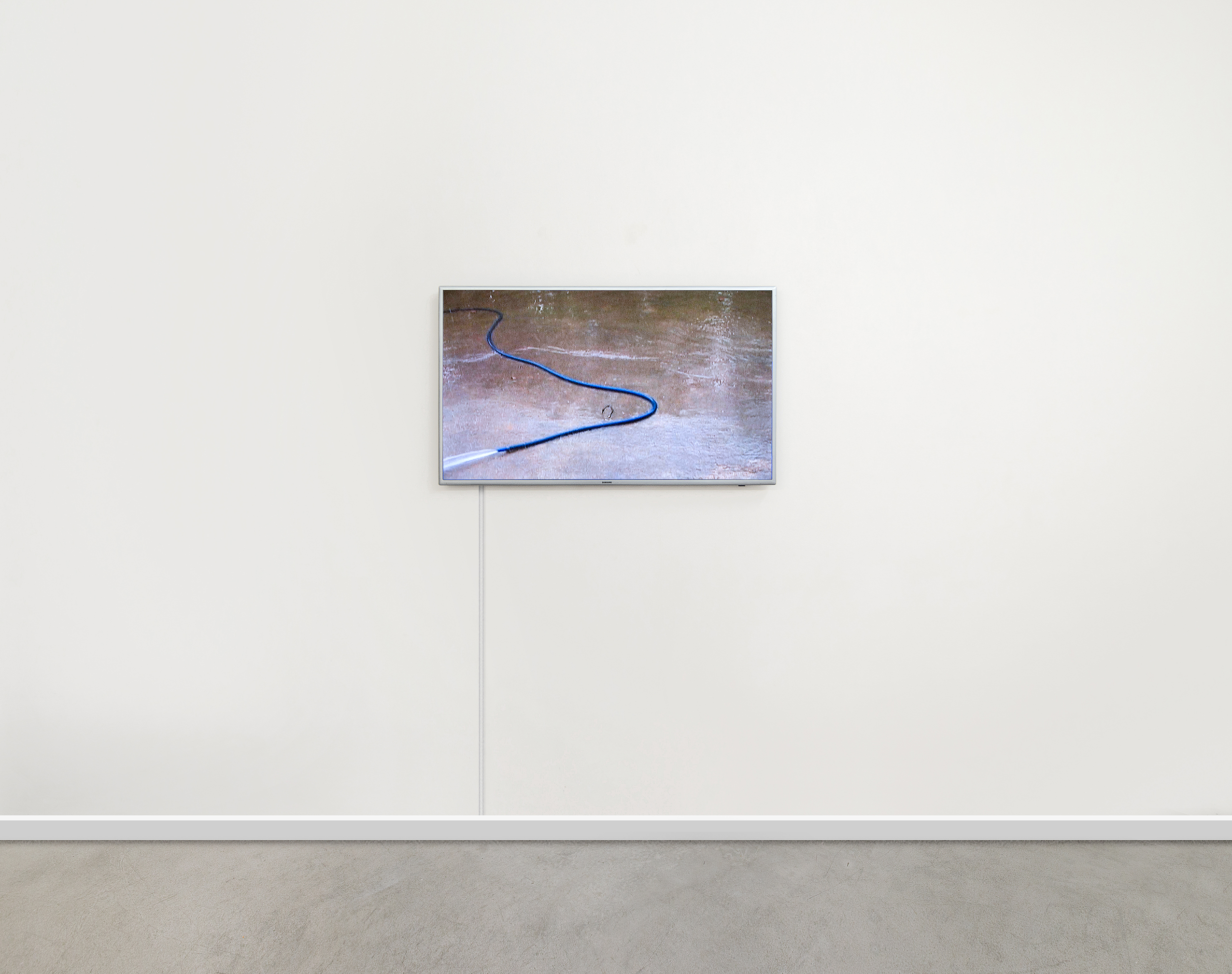
Pablo Lobato explores the relationship between humans, matter and natural forces. In Nascente, a simple garden hose through which water flows seems to come to life. It twists and moves under the pressure flowing through it. The work emerges from a collaboration with the elements: Lobato allows them to act freely, embracing unexpected movements, uncertainty and transformation. He becomes both observer and mediator, guiding matter rather than imposing control. Lobato seeks to listen to what the world expresses in silence, slowing down the gaze and giving importance to simple phenomena.
Norton Maza creates miniature worlds where fiction, satire and social criticism intersect. In Architecture des ombres he constructs a diorama using recycled materials, toys, found objects and items he has made himself, recreating a scene that evokes the imbalances and violence of the contemporary world. Behind the apparent playfulness of his models lie issues relating to the immorality of systems of power, the devastation caused by contemporary conflicts, the oil industry and financial speculation.
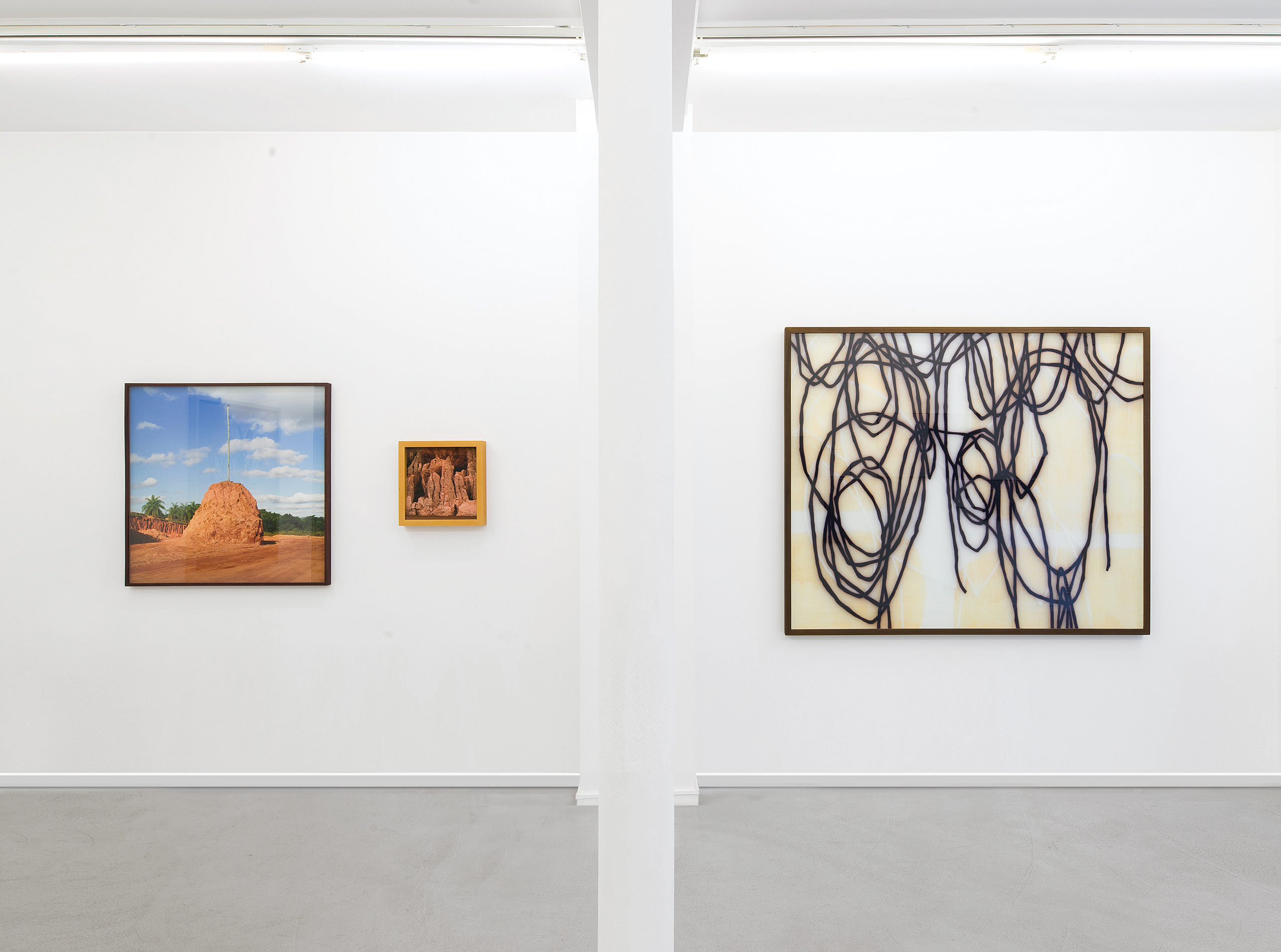
Pedro Motta examines landscape transformation through both natural and human processes. In Falência #2, he focuses on erosion caused by rainfall, where the earth seems to dissolve and lose all structure, forming unstable shapes close to “sculptural sutures”. In Arquipélago #2, he documents the expansion of roads and infrastructure sites, revealing isolated islands of land created by machinery. Between documentation and staging, Motta blurs the boundary between territorial transformation and visual fiction. His images present landscapes in constant mutation, where traces of terrain, gradual erasure and human intervention intertwine.
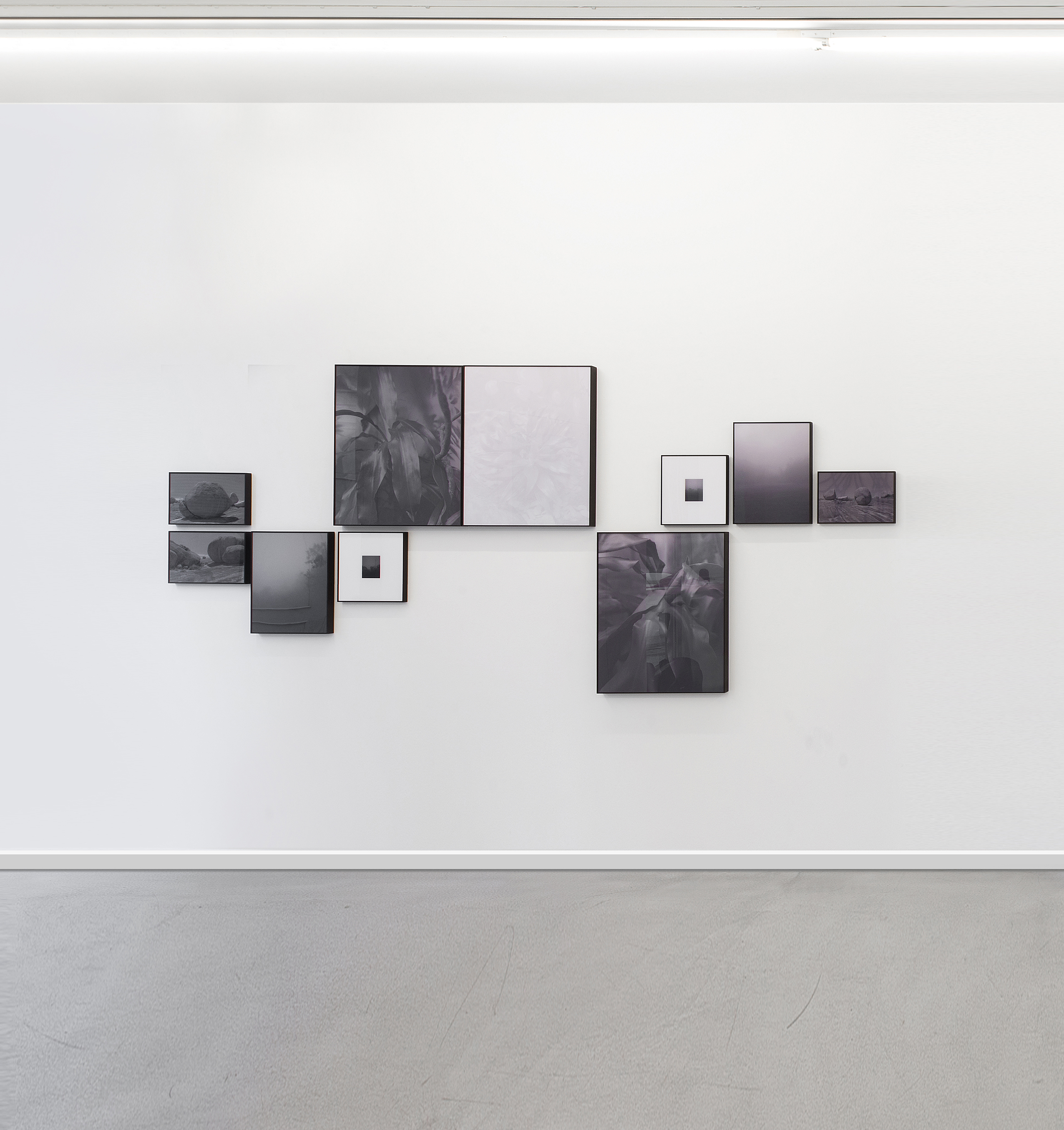
Caio Reisewitz adopts, in the works presented, a form of abdication as a means of denouncing exhaustion. By obscuring the natural colours of landscapes and diminishing their physical potential, he highlights the end of the tension between nature and culture as conceived by anthropology. While Western societies have prevailed through a supposedly “universal” cultural model and a mode of production that weakens living systems, nature now responds through the scarcity of essential resources for survival.
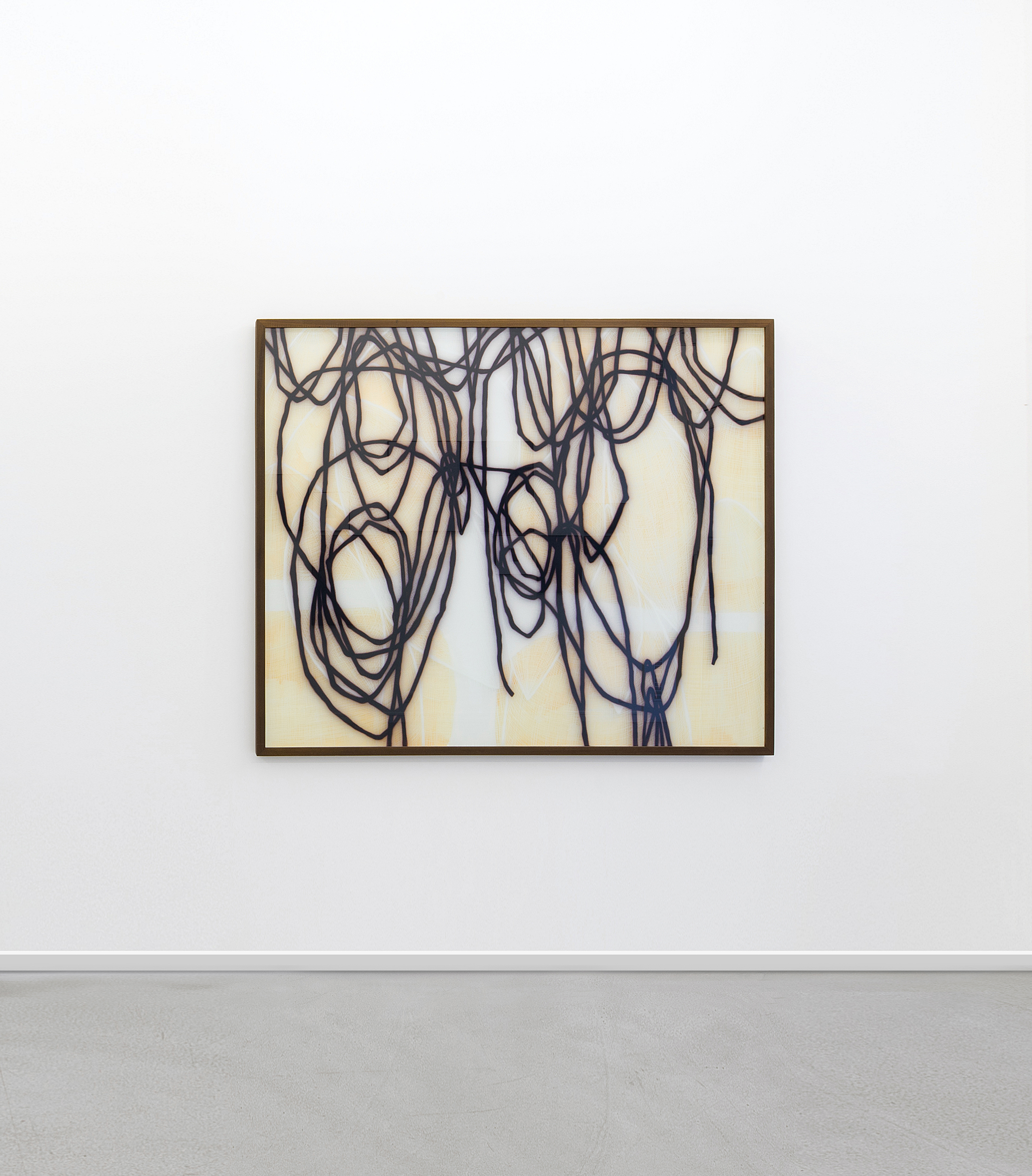
Julio Rondo develops a reflection on memory, perception and the materiality of the image. His acrylic paintings on glass occupy an ambiguous space, where transparency, reflections and light integrate the surroundings and the viewer’s gaze into the work itself. Working in an abstract language, Rondo brings forth forms derived from drawings, sketches and traces accumulated over the years. His practice is built from fragments of memories, places and sensations reinterpreted through painting. The image thus becomes a space of projection, where personal memory and the perception of the present overlap.